← Back to The Sacred Heartland
Ayodhya

Ayodhya

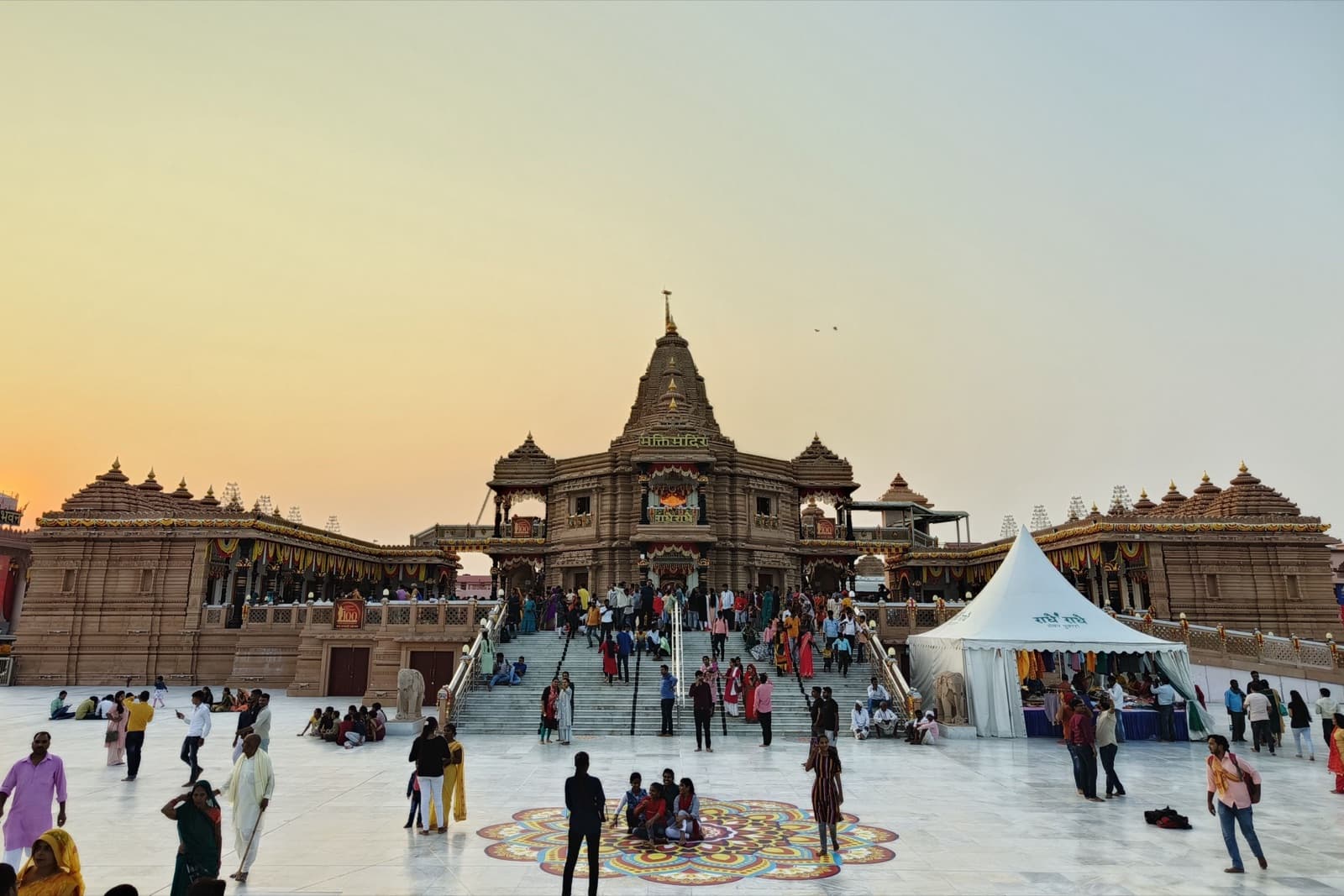
On the Sarayu River, traditionally identified as Rama's birthplace and the setting of the Ramayana.

Ayodhya

A closer look

Nearest airport
Maharishi Valmiki International Airport (Ayodhya Dham Airport) (AYJ)
about 15 km from the city

Getting there

By air
Maharishi Valmiki International Airport (Ayodhya Dham Airport) (AYJ)

about 15 km from the city

By rail
Ayodhya Dham Junction

About 1 to 2 km from the temple, a 15 to 20 minute walk or a short e-rickshaw ride. Recently redeveloped into a large modern station befitting the pilgrimage traffic; by far the closest and most convenient way in for most visitors.

By road

On NH27/NH330. Well connected by road to Lucknow (the nearest major city beyond this circuit) and to Prayagraj.

On this circuit: Reached from Prayagraj: about 155 km, roughly 4 to 5 hours by road. Closes the Sacred Heartland circuit here, or continue onward to Lucknow (about 125 km) if extending the trip.

Stories about this place

Ancient: Founded in tradition

Local tradition, passed down but not formally documented

Tradition holds that Ayodhya was founded by Manu, the legendary progenitor of humankind, and became capital of the Ikshvaku (Solar) dynasty, the lineage of Rama in the Ramayana.

Source: Britannica, Ayodhya

Early Iron Age onward: Saketa, capital of Kosala

Historical record

Known historically as Saketa, the city served as capital of the Kingdom of Kosala, one of the sixteen great states (mahajanapadas) of ancient India. Archaeological evidence places settlement here from at least the early Iron Age, with the first written references appearing in late Vedic literature and Buddhist canonical texts.

Source: Live History India, Ayodhya: History Beyond the Epics and Politics

2nd century CE: Under the Kushan Empire

Historical record

Saketa came under the rule of the Kushan Empire during the reign of Emperor Kanishka.

Source: Live History India, Ayodhya: History Beyond the Epics and Politics

Mid-18th century: Political centre shifts to Faizabad

Historical record

Regional political authority moved to neighbouring Faizabad and later Lucknow, though Ayodhya retained its standing as a spiritual capital throughout.

Source: Live History India, Ayodhya: History Beyond the Epics and Politics

Ancient: The birthplace tradition

Local tradition, passed down but not formally documented

Hindu tradition holds this site in Ayodhya as the birthplace (janmabhoomi) of Rama, an avatar of Vishnu and hero of the Ramayana. As with much of Ayodhya's antiquity, this identification rests on textual and devotional tradition rather than independently datable archaeology.

1528 CE: The Babri Masjid built

Historical record

A mosque, later known as the Babri Masjid, was built at the site. Hindu tradition held it stood on the remains of a temple marking Rama's birthplace, and petitioners in later litigation identified its builder as Mir Baqi, a commander associated with the Mughal emperor Babur.

Source: Britannica, Babri Masjid

1859: British-era partition of the site

Verified fact

The colonial administration built a fence dividing the site, allowing Muslims to pray inside the structure and Hindus to worship in an outer courtyard, formalising an arrangement that had grown up around it.

Source: Gulf News, Ayodhya dispute in India: Timeline

1885: First recorded legal plea

Verified fact

Mahant Raghubir Das filed a civil suit in Faizabad court seeking permission to build a canopy in the outer courtyard. The suit was rejected, one of the first recorded legal episodes in what became a much longer dispute.

Source: Outlook India, Tracing The History Of Babri Masjid: From 1528 To Today

1949: Idols placed inside the mosque

Verified fact

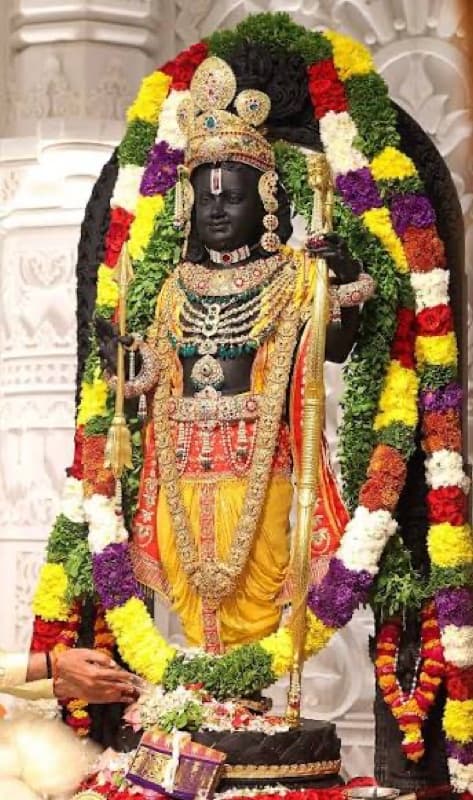
Idols of Ram Lalla appeared inside the mosque beneath its central dome. The two sides have long disputed the circumstances (some accounts describe a miraculous appearance, others an installation carried out overnight). The government locked the site's gates soon afterward, and litigation began.

6 December 1992: Demolition of the Babri Masjid

Historical record

The Babri Masjid was demolished by a large crowd of kar sevaks during a political rally, an event that triggered nationwide communal violence and reshaped Indian politics for decades afterward.

Source: Outlook India, Babri Masjid Demolition: A Timeline Of The Ram Janmabhoomi Dispute Case

1950 onward: Decades of title suits

Verified fact

Multiple civil suits over the site's title were filed by different parties over the following decades, later consolidated, seeking either the right to worship or outright ownership of the land.

After 1992: Site acquired pending resolution

Verified fact

Following the demolition, the central government acquired the disputed site and adjoining land by ordinance and later by Act, pending final legal resolution. Criminal proceedings over the demolition itself continued separately for decades.

2010: Allahabad High Court: three-way division

Verified fact

Ruling on the consolidated title suits, the Allahabad High Court ordered the disputed 2.77 acre site divided three ways among the principal litigants, two Hindu parties and the Sunni Waqf Board. All sides appealed to the Supreme Court.

9 Nov 2019: Supreme Court verdict

Verified fact

The Supreme Court delivered a unanimous verdict awarding the full disputed site to a trust to be formed for construction of a Ram temple, while directing the government to allot 5 acres elsewhere in Ayodhya to the Sunni Waqf Board for a mosque.

Source: Wikipedia, 2019 Supreme Court verdict on Ayodhya dispute

2020: Demolition case: all accused acquitted

Verified fact

A special CBI court acquitted all remaining accused in the separate criminal case over the 1992 demolition, citing insufficient evidence. This verdict addressed criminal liability for the demolition, a distinct question from the land title dispute the Supreme Court had already settled the previous year.

Festivals & best time to visit

Best time to visit: October to March, especially December and January, with daytime temperatures around 20 to 25°C cooling to near 5°C at night. This is also peak festival and pilgrimage season, so book accommodation ahead.

Ram Navami

Next: 15 Apr 2027

Marks Ram's birth, on the ninth day of Chaitra Navratri. Millions of pilgrims take a holy dip in the Saryu, and the city fills with bhajans, kirtans, Ramayana recitations and a Shobha Yatra/Rath Yatra for Ram, Sita, Lakshman and Hanuman: the single largest pilgrimage day of the year here.

Deepotsav

Next: 7 Nov 2026

Ayodhya's own record-breaking festival, held on the evening before Diwali. The 2025 edition lit 26.17 lakh earthen diyas across 56 ghats along the Saryu, setting two Guinness World Records; the 2026 edition is aiming for over 28 lakh diyas across 51 ghats, centred on Ram Ki Paidi and the Saryu ghats.

Where to stay

Real, independently sourced hotels - see each listing's source link. Booking here is a demo reservation, not a real payment or confirmed room.

Luxury
₹8,300–₹8,300
Pool
Standard
₹5,300–₹5,300
Budget
₹2,236–₹2,236
Only one hotel cleanly cleared the 4+ rating bar within 5 km at this price point in this early-stage market - reported as-is rather than padded out with a lower-rated property.